Join us soon at La Heredad de aguas de Arucas if you want to celebrate The festival of Lights, with music and typical sweets .More details about the events coming son
Diwali
Deepavali" redirects here. For the Nepali festival, see
Tihar. For the films, see
Deepavali.
|
|---|
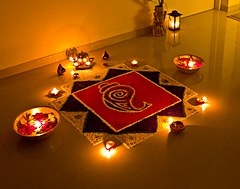
Rangoli decorations, made using coloured powder, are popular during Diwali
|
| Also called | Deepavali, Festival of Lights |
|---|
| Observed by | Hindus, Sikhs, Jains and Buddhists [1] |
|---|
| Type | Hindu, cultural |
|---|
| Celebrations | Diya and lighting, home decoration, shopping, fireworks, puja (prayers), gifts, feast and sweets |
|---|
| Begins | Dhanteras, 2 days before Diwali |
|---|
| Ends | Bhai Dooj, 2 days after Diwali |
|---|
| Date | Varies per Hindu Lunisolar calendar |
|---|
| 2015 date | 10 November in South India,[2]
11 November[2] in North India |
|---|
| 2016 date | 30 October (Sunday) |
|---|
| 2017 date | 19 October (Thursday) |
|---|
| Related to | Kali Puja, Diwali (Jainism), Bandi Chhor Divas |
|---|
Diwali (or Deepavali, the "
festival of lights") is an ancient
Hindu festival celebrated in autumn (northern hemisphere) every year.
[3][4] Diwali is the biggest and the brightest festival in India. The festival spiritually signifies the victory of light over darkness.
[5][6][7] The festival preparations and rituals typically extend over a five-day period, but the main festival night of Diwali coincides with the darkest, new moon night of the Hindu Lunisolar month
Kartika. In the
Gregorian calendar, Diwali falls between mid-October and mid-November.
Before Diwali night, people clean, renovate and decorate their homes and offices.
[8] On Diwali night, Hindus dress up in new clothes or their best outfit, light up
diyas (lamps and candles) inside and outside their home, participate in family
puja (prayers) typically to
Lakshmi – the goddess of wealth and prosperity. After
puja, fireworks follow,
[9] then a family feast including
mithai (
sweets), and an exchange of gifts between family members and close friends. Diwali also marks a major shopping period in nations where it is celebrated.
[10]
Diwali is an important festival for Hindus. The name of festive days as well as the rituals of Diwali vary significantly among Hindus, based on the region of India. In many parts of India,
[11] the festivities start with
Dhanteras, followed by
Naraka Chaturdasi on second day, Diwali on the third day,
Diwali Padva dedicated to wife–husband relationship on the fourth day, and festivities end with
Bhau-beej dedicated to sister–brother bond on the fifth day.
Dhanteras usually falls eighteen days after
Dussehra.
On the same night that Hindus celebrate Diwali,
Jains celebrate a festival of lights to mark the attainment of
moksha by
Mahavira,
[12][13] and
Sikhs celebrate
Bandi Chhor Divas. Diwali is an official holiday in
Nepal,
India,
[14] Sri Lanka,
Myanmar,
Mauritius,
Guyana,
Trinidad and Tobago,
Suriname,
Malaysia,
Singapore,
Fiji and
Pakistan.
Etymology[edit]
Diwali celebrations
|
|
Outdoor Diya decoration on Diwali night
|
|
|
|
Diwali and Bandi Chhor Divas celebrations in Amritsar |
Diwali night fireworks over a city( Chennai) |
|
Rural celebrations – floating Diya over river Ganges
|
|
Diwali festivities include a celebration of sights, sounds, arts and flavors. The festivities vary between different regions. [15][16][17] |
Diwali is derived from the
Sanskrit fusion word
Dīpāvali, formed from
dīpa (
दीप, "light" or "lamp"
[18][19]) and
āvalī (
आवली, "series, line, row"
[20]).
Dīpāvali or
Deepavali thus meant a "row" or "series of lights".
[21] Its celebration include millions of lights shining on housetops, outside doors and windows, around temples and other buildings in the communities and countries where it is observed.
[15]
Diwali (
English pronunciation: )
[3] is variously named and spelled/pronounced in diverse languages of India: 'deepabali' (
Odia:
ଦିପାବଲି), 'deepaboli' (
Bengali:
দীপাবলী), 'deepavali' (
Assamese:
দীপাৱলী,
Kannada:
ದೀಪಾವಳಿ,
Malayalam:
ദീപാവലി,
Tamil:
தீபாவளி and
Telugu:
దీపావళి), 'divali' (
Gujarati:
દિવાળી,
Hindi:
दिवाली,
Marathi:
दिवाळी,
Konkani:
दिवाळी,
Punjabi:
ਦੀਵਾਲੀ), 'diyari' (
Sindhi:
दियारी), and '
tihar' (
Nepali:
तिहार).
History[edit]
Diwali dates back to ancient times in India, as a festival after the summer harvest in the
Hindu calendar month of
Kartika. The festival is mentioned in Sanskrit scriptures such as the
Padma Purana, the
Skanda Purana both completed in second half of 1st millennium AD but believed to have been expanded from a core text from an earlier era. The
diyas (lamps) are mentioned in Skanda Purana to symbolically represent parts of sun, the cosmic giver of light and energy to all life, who seasonally transitions in the Hindu calendar month of Kartik.
[16][22] Hindus in some regions of India associate Diwali with the legend of Yama and
Nachiketa on Kartika
amavasya (Diwali night).
[23] The Nachiketa story about right versus wrong, transient wealth versus true wealth, ignorance versus knowledge is recorded in
Katha Upanishad composed in 1st millennium BC.
[24]
King Harsha in the 7th century Sanskrit play
Nagananda mentions Diwali as
Deepapratipadutsava, where lamps were lit and newly engaged brides and grooms were given gifts.
[25][26] Rajasekhara referred to Diwali as
Dipamalika in his 9th century
Kavyamimamsa, wherein he mentions the tradition of homes being whitewashed and oil lamps decorating homes, streets and markets in the night.
[25] The Persian traveller and historian
Al Biruni, in his 11th century memoir on India, wrote Diwali being celebrated by Hindus on New Moon day of the month of Kartika.
[27]
Significance[edit]
Diwali is one of the happiest holidays in
Nepal and India with significant preparations. People clean their homes and decorate them for the festivities. Diwali is one of the biggest shopping seasons in
Nepal and India; people buy new clothes for themselves and their families, as well as gifts, appliances, kitchen utensils, even expensive items such as cars and gold jewelry.
[28] People also buy gifts for family members and friends which typically include sweets, dry fruits, and seasonal specialties depending on regional harvest and customs. It is also the period when children hear ancient stories, legends, myths about battles between good and evil or light and darkness from their parents and elders. Girls and women go shopping and create rangoli and other creative patterns on floors, near doors and walkways. Youth and adults alike help with lighting and preparing for
patakhe (fireworks).
[17][29]
There is significant variation in regional practices and rituals. Depending on the region, prayers are offered before one or more deities, with most common being Lakshmi – the goddess of wealth and prosperity. On Diwali night, fireworks light up the neighborhood skies. Later, family members and invited friends celebrate the night over food and sweets.
[17][29]





.jpg)


